
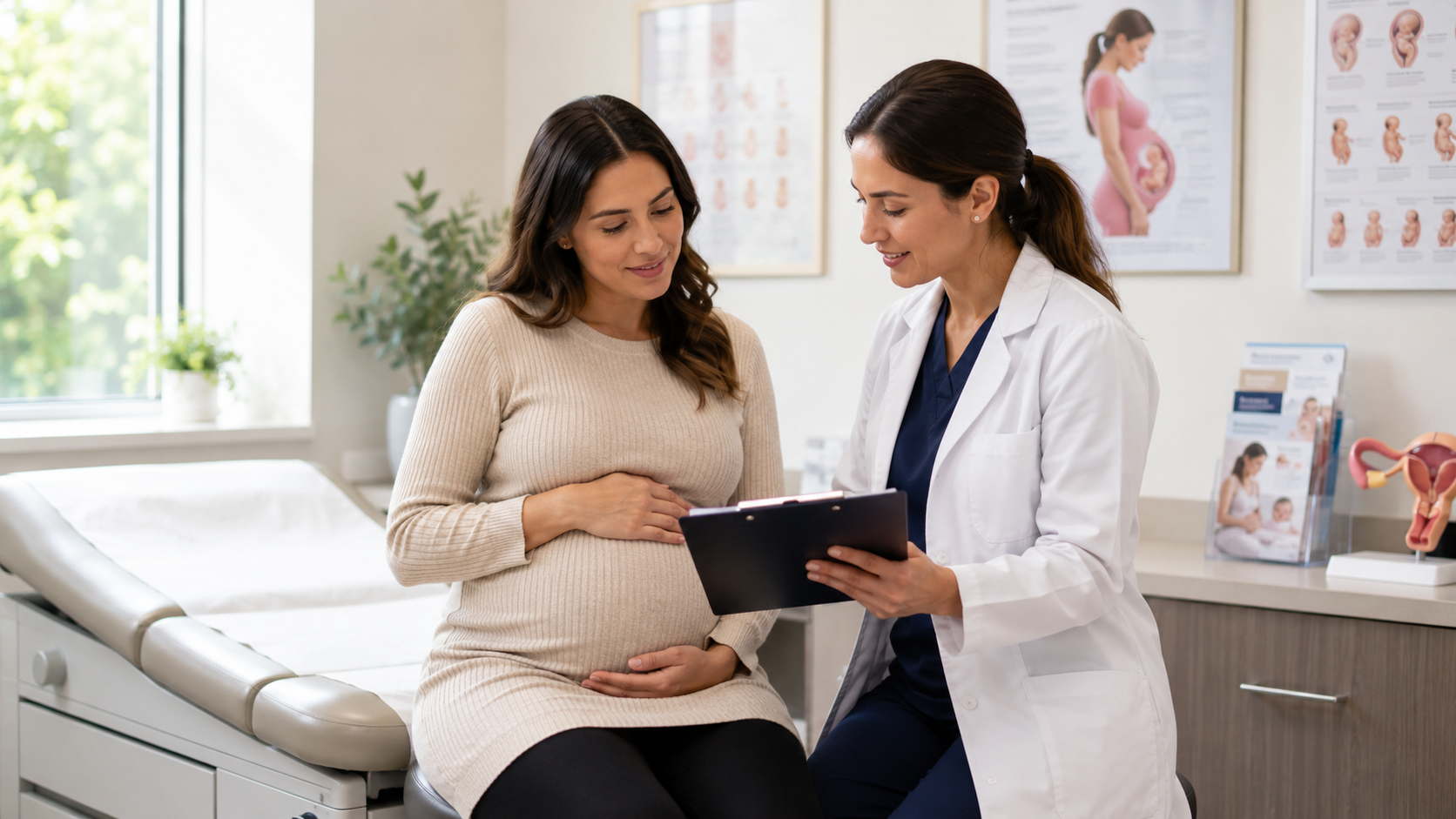
Prenatal Visit Questions in Coral Springs, Florida
Prenatal visit questions are the questions a pregnant patient should ask during the first OB-GYN appointment to understand pregnancy health, testing, symptoms, risks, medications, nutrition, and the care schedule. They help patients in Coral Springs, Florida prepare for a safer, clearer, and more confident pregnancy experience.
Prenatal visit questions improve communication between the patient and provider. They help your OB-GYN understand your medical history, family history, symptoms, lifestyle, medications, and concerns early in pregnancy.
Prenatal visit questions also help you know what happens next. Your first prenatal visit may include pregnancy confirmation, blood pressure, weight, medical history review, lab testing, urine testing, physical exam, pelvic exam, Pap test if needed, ultrasound discussion, prenatal vitamin guidance, and counseling about healthy pregnancy habits.
Why Prenatal Visit Questions Matter
Prenatal visit questions matter because the first appointment sets the foundation for your pregnancy care plan. This visit helps your provider confirm important health details, identify possible risks, and explain what care may be needed during each trimester.
A first prenatal visit is also the right time to discuss symptoms, emotional health, food safety, exercise, medications, supplements, genetic screening, and warning signs. Clear questions help you leave the appointment with practical answers instead of uncertainty.
- Prenatal visit questions help your OB-GYN understand your health history.
- Prenatal visit questions help you understand which tests may be recommended.
- Prenatal visit questions help you know which symptoms need urgent attention.
- Prenatal visit questions help you review medications, vitamins, and supplements safely.
- Prenatal visit questions help you prepare for follow-up visits, ultrasounds, and screenings.
17 Prenatal Visit Questions to Ask at Your First Appointment
The best prenatal visit questions are direct, personal, and focused on your health, your baby’s development, and your next steps. Bring a written list so you can ask each question during the appointment.
1. How far along am I, and what is my estimated due date?
This question helps confirm your pregnancy timeline. Your provider may use your last menstrual period, exam findings, or ultrasound information to estimate your due date.
2. What tests will I need during the first trimester?
This question helps you understand blood work, urine tests, blood type testing, Rh factor testing, infection screening, and any other early pregnancy testing your provider recommends.
3. Will I need an ultrasound at this visit or soon?
This question helps clarify when imaging may be used to confirm dating, check fetal development, or evaluate symptoms such as bleeding or pain.
4. Is my pregnancy considered routine or high risk?
This question helps identify whether age, health conditions, previous pregnancy history, medications, or family history may require closer monitoring.
5. Which prenatal vitamin should I take?
This question helps confirm the right prenatal vitamin and folic acid needs. Your provider can also explain whether iron, vitamin D, DHA, or other supplements are appropriate.
6. Are my current medications safe during pregnancy?
This question is important because prescriptions, over-the-counter medications, herbs, and supplements may need review. Do not stop prescribed medication without guidance from your provider.
7. What foods and drinks should I avoid?
This question helps you understand food safety during pregnancy. Your provider can discuss alcohol, high-mercury fish, undercooked foods, unpasteurized products, caffeine, hydration, and balanced nutrition.
8. How much weight should I gain?
This question helps personalize pregnancy weight guidance based on your pre-pregnancy health, body mass index, and whether you are carrying one baby or multiples.
9. Can I exercise during pregnancy?
This question helps you understand safe movement. Many pregnant patients can stay active, but your provider should confirm what is safe based on your health and pregnancy status.
10. Is it safe to have sex during pregnancy?
This question helps address a common concern. Your provider can explain whether sex is safe for your situation or whether symptoms or complications require restrictions.
11. What symptoms are normal in early pregnancy?
This question helps you understand nausea, fatigue, breast tenderness, mild cramping, urinary changes, mood changes, and other common early pregnancy symptoms.
12. What warning signs mean I should call the office?
This question helps you know when to seek help. Ask about bleeding, severe abdominal pain, fever, severe vomiting, fainting, chest pain, shortness of breath, severe headache, or other urgent symptoms.
13. How often will I have prenatal visits?
This question helps you plan your schedule. Your provider can explain how often visits usually occur and how the schedule may change later in pregnancy.
14. What genetic screening options are available?
This question helps you understand optional and recommended screening choices. Your provider can explain timing, benefits, limitations, and whether genetic counseling may be helpful.
15. Which hospital or birth setting do you use?
This question helps you understand where delivery may occur and what steps are needed to prepare for labor, birth registration, and hospital policies.
16. Who do I call after hours?
This question helps you know how to reach the office, on-call provider, or emergency services when concerns happen outside regular office hours.
17. What should I do before my next visit?
This question helps you leave with a clear plan. Your provider may recommend labs, imaging, medication changes, lifestyle steps, follow-up scheduling, or warning signs to watch.
What is the Best First Prenatal Visit Question?
The best first prenatal visit question is: “Is there anything in my health history, symptoms, medications, or family history that changes my pregnancy care plan?” This question gives your OB-GYN a direct opening to identify personal risks, testing needs, medication concerns, and follow-up steps.
This question is better than asking only general pregnancy questions because it focuses on your specific pregnancy. It helps your provider connect your medical background with the care you need now.
What Happens During the First Prenatal Visit?
The first prenatal visit usually includes a review of your medical history, pregnancy history, family history, lifestyle, medications, allergies, symptoms, and prior surgeries. Your provider may also check blood pressure, height, weight, and other basic health measurements.
Your OB-GYN may order blood work, urine testing, infection screening, blood type testing, Rh factor testing, and other routine prenatal labs. A physical exam, pelvic exam, breast exam, Pap test, or ultrasound may be recommended based on your history and timing.
The visit is also a counseling appointment. Your provider may discuss prenatal vitamins, nutrition, exercise, vaccines, travel, dental care, safe medications, mental health, and when to call for urgent symptoms.
What Should I Bring to My First Prenatal Visit?
Bring information that helps your provider understand your health quickly. Accurate details help your OB-GYN make safer recommendations and avoid missing important risk factors.
- Photo ID and insurance card.
- Date of your last menstrual period.
- Positive pregnancy test date.
- List of prescriptions, over-the-counter medicines, vitamins, and supplements.
- Medical history, surgery history, and allergy list.
- Prior pregnancy history, including miscarriages, deliveries, or complications.
- Family history of genetic conditions, blood disorders, birth defects, diabetes, hypertension, or clotting disorders.
- Questions about symptoms, diet, exercise, work, travel, sex, or medications.
Benefits of Asking Prenatal Visit Questions Early
Asking prenatal visit questions early helps you avoid confusion during the first trimester. Early answers help you understand what is normal, what should be reported, and what choices may need to be made soon.
- Better understanding of your pregnancy timeline.
- Clearer instructions for vitamins, medications, food, and activity.
- Earlier identification of risk factors.
- More confidence with lab work, ultrasounds, and screenings.
- Stronger communication with your OB-GYN care team.
Can I Ask About Morning Sickness at My First Prenatal Visit?
Yes. Morning sickness is a common reason to ask questions at the first prenatal visit. Your provider can explain hydration, nutrition, medication options, and when vomiting becomes concerning.
Should I Ask About Miscarriage Warning Signs?
Yes. Asking about miscarriage warning signs can help you understand which symptoms require a call, urgent evaluation, or emergency care.
Should I Ask About Genetic Testing?
Yes. Genetic screening is time-sensitive, and your first prenatal visit is a good time to ask which options are available, when they are performed, and what the results can and cannot tell you.
Should I Ask About Delivery at the First Visit?
Yes. Delivery may feel far away, but asking where your provider delivers helps you understand hospital affiliation, birth planning, and what to expect later in pregnancy.
Should I Ask About Mental Health During Pregnancy?
Yes. Pregnancy can affect mood, anxiety, sleep, and stress. Your provider can discuss screening, support, and treatment options when needed.
Helpful Resources for Pregnancy Education
For additional pregnancy education, review trusted medical resources such as the American College of Obstetricians and Gynecologists prenatal care FAQ, MedlinePlus prenatal care information, and March of Dimes prenatal care checkup guidance.
Related Comprehensive OB-GYN Blog resources include Pregnancy Education, Postpartum Care, and Preventive Women’s Health.
The pillar page for this topic should be Obstetrics and Pregnancy Care.
Frequently Asked Questions About Prenatal Visit Questions
What questions should I ask at my first prenatal visit?
Ask about your due date, recommended tests, ultrasound timing, prenatal vitamins, safe medications, symptoms, food safety, exercise, genetic screening, visit schedule, and when to call the office.
What is the most important question to ask at the first prenatal visit?
The most important question is whether your health history, symptoms, medications, or family history changes your pregnancy care plan.
When should I schedule my first prenatal visit?
Many patients schedule the first prenatal visit after a positive pregnancy test. Your OB-GYN office can recommend timing based on your last menstrual period, symptoms, and medical history.
Will I get an ultrasound at my first prenatal visit?
You may or may not get an ultrasound at the first visit. Timing depends on your gestational age, symptoms, medical history, and your provider’s clinical recommendation.
What tests are usually done early in pregnancy?
Early pregnancy testing may include blood work, urine testing, blood type, Rh factor, infection screening, and other labs based on your health history.
Should I bring my medication list to the first prenatal visit?
Yes. Bring all prescriptions, over-the-counter medications, vitamins, herbs, and supplements so your provider can review safety during pregnancy.
Should I ask about prenatal vitamins?
Yes. Ask which prenatal vitamin is right for you and whether you need folic acid, iron, vitamin D, DHA, or other supplements.
Can I ask about diet at the first prenatal visit?
Yes. Ask what foods and drinks to avoid, how much caffeine is appropriate, how to manage nausea, and how to support healthy weight gain.
Can I ask about exercise during pregnancy?
Yes. Your provider can explain which exercises are safe and whether any medical conditions require activity changes.
Should I ask about high-risk pregnancy?
Yes. Ask whether your age, health history, prior pregnancies, medications, or family history make your pregnancy higher risk.
Should I ask about genetic screening?
Yes. Genetic screening options are often discussed early in pregnancy because some tests have specific timing windows.
What symptoms should I ask about?
Ask about bleeding, cramping, nausea, vomiting, fatigue, headaches, fever, pelvic pain, dizziness, and any symptom that feels unusual or concerning.
Should I ask who to call after hours?
Yes. Ask how to reach the office, on-call provider, or emergency services if urgent symptoms happen outside regular business hours.
What should I do after my first prenatal visit?
Follow your provider’s instructions for labs, ultrasound scheduling, vitamins, medications, next appointment timing, and urgent symptom guidance.
Are prenatal visit questions different for first-time moms?
First-time moms may have more questions about symptoms, testing, birth planning, and what to expect. The best questions are the ones that help you understand your personal care plan.
Schedule Prenatal Care in Coral Springs, Florida
Comprehensive OB-GYN Blog provides educational women’s health information for pregnancy, postpartum care, menopause, pelvic health, preventive care, and questions to discuss with your provider.
To discuss prenatal visit questions with a provider, contact Comprehensive OB-GYN at 8880 Royal Palm Blvd STE 100, Coral Springs, FL 33065, or call (954) 753-2411.