
Breastfeeding positions are a cornerstone of a successful and comfortable nursing journey for both mother and baby. Finding the right hold can transform a challenging experience into a beautiful bonding moment, and Comprehensive OBGYN is here to share 5 powerful secrets to help you achieve just that. We understand that every mother’s experience is unique, and our goal is to provide easy-to-understand, uplifting, and genuinely helpful guidance through every stage of your postpartum care.
Key Takeaways
- Explore foundational breastfeeding positions like the cradle, cross-cradle, and football hold to establish early nursing comfort.
- Master the art of proper latching, ensuring your baby feeds effectively and you avoid discomfort in any nursing stance.
- Discover tailored positions specifically designed for mothers recovering from a C-section or those with unique physical needs.
- Embrace laid-back and side-lying nursing techniques that promote natural instincts and offer enhanced relaxation for nighttime feeds.
- Understand that Comprehensive OBGYN encourages personalized support and meaningful conversations with your provider to find your ideal breastfeeding rhythm.
Breastfeeding Positions: 5 Powerful Secrets for Comfortable Nursing
The Foundation: Common Breastfeeding Positions for Newborns
For new mothers, understanding the basic nursing holds is the first step toward a confident nursing journey. These foundational holds provide essential support for your newborn and help establish an effective latch from day one. At Comprehensive OBGYN, we believe in equipping you with clear, actionable knowledge to make your early days of nursing as smooth as possible.
The cradle hold is often the most iconic and natural-feeling position. In this hold, your baby lies across your lap, with their head resting in the crook of your arm. Your forearm supports their back, and their body is tummy-to-tummy with yours. This position allows for close contact and easy visibility of your baby’s face, making it simple to monitor their latch.
The cross-cradle hold is similar but offers more control over your baby’s head. You support your baby’s head with the hand opposite the breast they are feeding from, while your other hand supports your breast. This can be particularly helpful for newborns or babies who need a little extra guidance to latch properly. It allows you to gently direct their head and neck, ensuring their mouth is wide open before bringing them to the breast.
The football hold, also known as the clutch hold, positions your baby under your arm, with their body tucked alongside your side, much like holding a football. You support their head with your hand and their back with your forearm. This position keeps your baby’s body away from any abdominal tenderness, making it an excellent choice for mothers recovering from a C-section or those with larger breasts. It also provides a clear view of your baby’s mouth and latch.
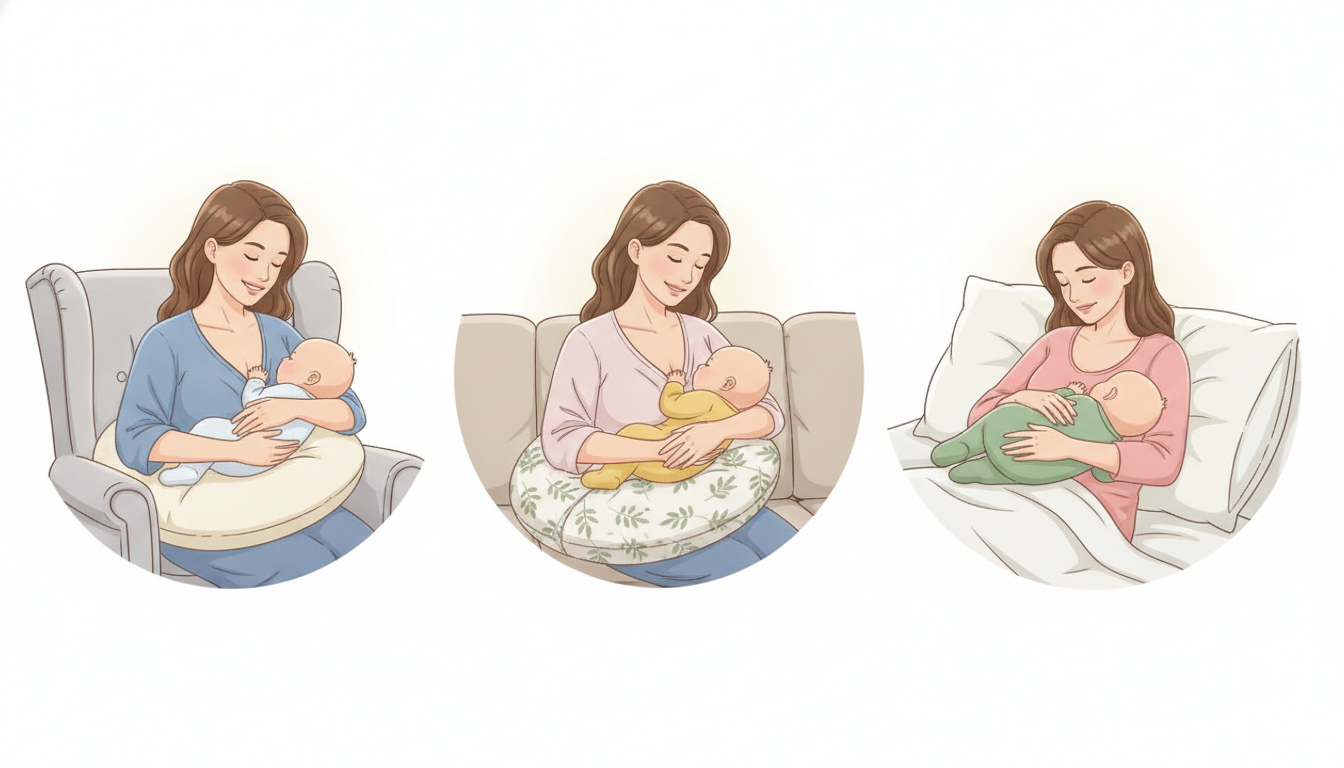
Mastering the Latch: Ensuring Comfort in Every Breastfeeding Position
A proper latch is absolutely critical for comfortable and effective feeding, regardless of the breastfeeding position you choose. When your baby latches correctly, they transfer milk efficiently, and you avoid nipple pain and damage. Understanding the mechanics of a good latch is a key wellness tip that Comprehensive OBGYN emphasizes in our postpartum care resources.
To achieve a deep and comfortable latch, ensure your baby’s nose is level with your nipple. Tickle their upper lip with your nipple until their mouth opens wide, like a yawn. Then, quickly bring your baby to your breast, aiming for their chin to touch your breast first. Your baby should take a large mouthful of breast tissue, not just the nipple. Look for flanged lips (like a fish mouth) and a chin that is pressed into your breast.
You should hear rhythmic swallowing, not just sucking, and feel a gentle tugging sensation, never pain. If you experience pain, gently break the latch by inserting a finger into the corner of your baby’s mouth and try again. This attention to detail can prevent many common breastfeeding challenges. For more in-depth guidance on proper latching techniques, you can consult authoritative resources like the La Leche League International, which offers extensive support for nursing mothers.
Tailoring Your Approach: Positions for C-Section Recovery and Specific Needs
Recovering from a C-section brings unique considerations for finding comfortable ways to nurse. The goal is to avoid any pressure on your incision site while still ensuring your baby can feed effectively. Comprehensive OBGYN supports women through every stage of health, including postpartum recovery from C-sections, offering guidance on these tailored approaches.
Here are some recommended positions for C-section recovery and other specific needs:
- Football Hold: As mentioned, this position keeps your baby’s body tucked away from your abdomen. Use pillows to support your arm and your baby’s weight, ensuring you don’t strain your back or shoulder. This allows for clear visibility of your baby’s latch without discomfort.
- Laid-Back Nursing: Also known as biological nurturing, this involves leaning back comfortably (on a bed or recliner) with your baby lying prone on your chest. Gravity helps your baby latch on naturally, and there’s no pressure on your C-section incision. This position also encourages skin-to-skin contact, which is beneficial for both mother and baby.
- Side-Lying Position: Ideal for resting, especially during nighttime feeds, the side-lying position allows you to lie on your side with your baby facing you. Use a pillow behind your baby’s back for support and ensure their mouth is aligned with your nipple. This position lets you rest while your baby nurses, minimizing movement and strain on your healing body.
- Koala Hold: For babies who prefer to sit upright, the koala hold can be effective. Your baby sits straddling your thigh, facing you, with their spine and head upright. This position can be particularly helpful for babies with reflux, as the upright posture can aid digestion.
For mothers nursing twins, the football hold can be adapted to nurse both babies simultaneously, one under each arm. Alternatively, a combination of the football hold and a modified cradle hold can work. Don’t hesitate to ask your provider about specific techniques during your postpartum consultation in Coral Springs.
Embracing Comfort: Laid-Back and Side-Lying Breastfeeding Positions
Beyond the traditional holds, embracing laid-back and side-lying nursing holds can significantly enhance comfort and promote a more relaxed nursing experience. These positions leverage gravity and natural instincts, often leading to a deeper latch and less strain for the mother. Comprehensive OBGYN’s educational content aims to make mothers feel supported and encouraged in finding comfortable solutions for their unique journey.
Laid-back nursing, sometimes called “biological nurturing,” is about getting comfortable yourself first. Lean back on a sofa or bed, supported by pillows, in a semi-reclined position. Then, place your baby tummy-down on your chest or belly. This encourages your baby to use their natural rooting and crawling reflexes to find your breast and latch on. Many mothers find this position incredibly relaxing, as it reduces the need to hold and position the baby precisely, allowing gravity to do much of the work. It also maximizes skin-to-skin contact, which is wonderful for bonding and stimulating milk production.
The side-lying position is a favorite for nighttime feeds and daytime rest. Lie on your side with a pillow under your head, and bring your baby close to you, facing your breast. You can use a rolled blanket or pillow behind your baby for support. Once latched, you can often rest while your baby nurses, making it easier to get much-needed sleep. This position is also excellent for mothers recovering from a C-section, as it keeps all pressure off the abdomen. Nursing offers such versatile and restful options.
Find Your Ideal Nursing Comfort at Comprehensive OBGYN
Our experienced team in Coral Springs is dedicated to supporting new mothers with personalized guidance on effective nursing techniques and comfortable positions.
Personalized Support: Finding Your Unique Breastfeeding Rhythm
Every mother and baby pair is unique, and what works for one may not work for another. Finding your ideal breastfeeding position is a personal journey that often involves trial and error. It’s about listening to your body, observing your baby’s cues, and adjusting as needed. Comprehensive OBGYN champions informed decision-making and encourages meaningful conversations with healthcare providers in Coral Springs for personalized support throughout your postpartum period.
Don’t be afraid to experiment with different nursing holds and techniques. What feels awkward initially might become your most comfortable position with practice. Pay attention to how your baby latches, how they swallow, and whether they seem content after a feed. Your comfort is just as important as your baby’s, as pain or discomfort can lead to early cessation of breastfeeding. If you’re struggling, remember you’re not alone.
Our blog is dedicated to supporting women through every stage of health, and that includes providing resources and answers to common questions about your postpartum journey. For more guidance and to discuss your specific concerns, we encourage you to explore our postpartum care resources or schedule a consultation with your healthcare provider. They can offer tailored advice and demonstrate techniques to ensure you and your baby find a comfortable and effective feeding rhythm.

Finding comfortable breastfeeding positions is a journey that can significantly impact your nursing experience. By understanding the foundational holds, mastering the latch, adapting for specific needs like C-section recovery, and embracing relaxing options like laid-back and side-lying nursing, you can establish a fulfilling feeding routine. Remember that Comprehensive OBGYN is here to provide supportive, educational content and encourages you to have meaningful conversations with your healthcare provider to find the personalized support you deserve.
Breastfeeding positions is best supported by trusted medical guidance. Learn more from the American College of Obstetricians and Gynecologists.
What are the most common breastfeeding positions for newborns?
For newborns, the cradle hold, cross-cradle hold, and football hold are frequently recommended due to the support they offer. Laid-back nursing (biological nurturing) is also excellent for encouraging natural instincts. These positions help mothers establish a good latch and comfortable feeding routine.
How to properly latch a baby in various breastfeeding positions?
Proper latch involves the baby taking a large mouthful of breast tissue, not just the nipple. Ensure the baby’s nose is level with your nipple, and their chin is touching your breast. Look for wide-open mouth, flanged lips, and rhythmic suck-swallow pattern for effective feeding.
Why is finding the right breastfeeding position crucial for comfort?
The right nursing position prevents nipple pain, promotes efficient milk transfer, and reduces strain on your back, neck, and shoulders. Comfort for both mother and baby is key to a positive and sustainable feeding experience, fostering a strong bond.
Which breastfeeding positions are recommended for mothers recovering from a C-section?
After a C-section, positions that avoid pressure on the incision site are ideal. The football hold, laid-back nursing, and side-lying position are excellent choices. Using pillows can also provide crucial support, ensuring you remain comfortable while your body heals.
What is the football hold and how do you do it?
In the football hold, your baby is tucked under your arm, similar to holding a football. Support their head with your hand and their back along your forearm. This position is particularly good for C-section recovery, twins, or if you have a strong let-down, allowing clear visibility of your baby’s latch.
Can nursing positions help alleviate issues like gas or reflux in babies?
Yes, certain nursing positions can help. Upright positions, like the koala hold or a more upright football hold, can reduce gas by keeping the baby’s head above their stomach. Laid-back positions can also slow milk flow, which may benefit babies with reflux.
How do I know if my baby is well-positioned and feeding effectively?
A well-positioned baby will have a deep, comfortable latch, with flanged lips and a chin touching the breast. You should hear rhythmic swallowing (not just sucking) and feel a gentle tug, not pain. After a feed, your breast should feel softer and your baby should appear content.
What are some comfortable laid-back nursing positions for skin-to-skin contact?
Laid-back nursing, also known as biological nurturing, involves leaning back comfortably while your baby lies prone on your chest. This encourages natural feeding reflexes and maximum skin-to-skin contact, promoting bonding and milk release. Use pillows for back support.
What is the best side-lying position for nighttime feeds?
The side-lying position is excellent for nighttime feeds as it allows both mother and baby to rest. Lie on your side with a pillow under your head, bringing your baby close to your breast. Ensure the baby is positioned securely and you can easily reach them for support.