Labor Pain Management is a crucial aspect of the birthing journey, empowering expectant parents to navigate childbirth with greater comfort and control. The experience of labor is profoundly personal, and understanding the array of options available for managing pain can transform a potentially overwhelming event into a more positive and empowering one.
This comprehensive guide explores five powerful strategies, from natural approaches to advanced medical interventions, designed to support you in achieving a more comfortable birth experience tailored to your individual needs and preferences.
For many, the anticipation of labor pain can be a source of anxiety. However, modern obstetrics offers a spectrum of choices, ensuring that every birthing person can find a method of Labor Pain Management that aligns with their values and medical circumstances. We will delve into the benefits and considerations of each approach, providing you with the knowledge to make informed decisions and partner effectively with your healthcare team.
Our goal is to demystify the process and highlight why effective Labor Pain Management is so important for a positive outcome.
Key Takeaways
- Understand the diverse types of Labor Pain Management options, from non-pharmacological techniques to medical interventions.
- Discover how natural methods can empower you to cope with contractions and support a comfortable birthing experience.
- Learn the critical considerations for pharmacological options like epidurals, including their benefits, risks, and timing.
- Explore the role of your birth partner and healthcare team in developing and implementing your personalized Labor Pain Management plan.
Labor Pain Management: 5 Powerful Options for a More Comfortable Birth
Understanding Labor Pain Management: Why It Matters
Labor Pain Management is not merely about eliminating discomfort; it is about empowering you to have a positive and safe birthing experience. The intensity of labor pain varies greatly among individuals, influenced by factors such as pain threshold, the baby’s position, the speed of labor, and emotional support. Recognizing this individuality is the first step in creating an effective strategy.
Why is effective pain management important during labor? It can reduce stress, conserve energy, and allow you to focus on the birthing process itself.
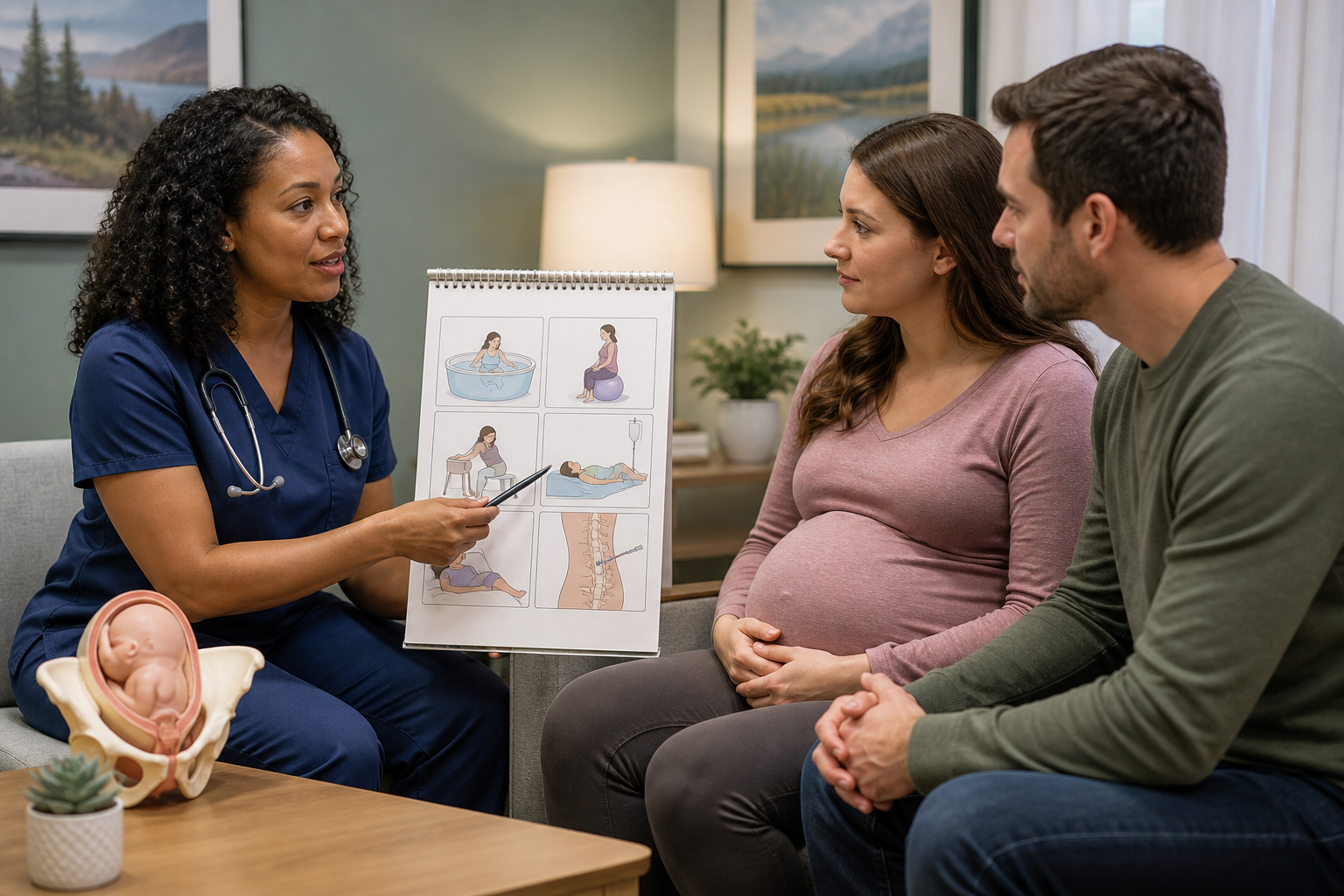
The different types of pain management options available during labor fall broadly into two categories: non-pharmacological (natural) and pharmacological (medical). Both categories offer unique benefits and considerations, and often, a combination of methods is used throughout labor. Your healthcare provider, including obstetricians, nurses, and anesthesiologists, will be key in guiding you through these choices. They provide labor pain management services in a hospital setting, ensuring expert care.
The Spectrum of Labor Pain Management Choices
Choosing your approach to Labor Pain Management is a deeply personal decision. It’s about finding what makes you feel most supported, safe, and in control. Some individuals prefer to embrace natural methods, focusing on their body’s innate ability to cope. Others may opt for medical interventions to significantly reduce or eliminate pain, allowing them to rest and participate differently in the birth.
It is essential to discuss all potential options with your healthcare provider well before your due date. This proactive conversation helps you understand what is available at your birthing facility and allows you to consider your preferences without the pressure of active labor. A well-informed decision contributes significantly to a positive experience with Labor Pain Management.
Option 1: Natural Approaches to Labor Pain Management
For many expectant parents, exploring how to naturally manage labor pain without medication is a priority. These non-pharmacological methods for Labor Pain Management focus on comfort, relaxation, and utilizing your body’s natural coping mechanisms. They can be used exclusively or in conjunction with medical interventions, offering flexibility throughout labor. These techniques empower you to remain active and engaged in the birthing process.

Natural methods often involve the continuous support of a partner, doula, or nurse, who can provide physical and emotional encouragement. This support is invaluable. Can my partner assist with pain management techniques during labor? Absolutely. Partners can offer massage, counter-pressure, verbal encouragement, and help with position changes, making them an integral part of your birthing team.
Effective Non-Pharmacological Techniques
There are numerous natural techniques that can significantly aid in Labor Pain Management. These methods leverage the mind-body connection to help you cope with contractions.
- Breathing Techniques: Focused, rhythmic breathing can help you stay calm, manage discomfort, and ensure adequate oxygen supply to you and your baby. Learning different patterns, such as slow, deep breaths or faster, lighter breaths, can be incredibly effective.
- Movement and Position Changes: Staying active and changing positions frequently can help the baby descend, reduce pressure, and alleviate pain. Walking, rocking, swaying, and using a birthing ball are excellent strategies for active labor support.
- Hydrotherapy: Warm showers or baths can be incredibly soothing, relaxing muscles and reducing the perception of pain. Many birthing centers offer tubs for laboring in water, providing a comforting environment.
- Massage and Counter-Pressure: Gentle massage on the back, shoulders, or legs can relieve tension. Counter-pressure applied to the lower back or hips during contractions can be particularly effective for back labor.
- Heat and Cold Packs: Applying warm compresses to the lower back or abdomen, or cold packs to the neck or forehead, can provide localized relief and distraction from pain.
- Acupressure/Acupuncture: Some individuals find relief through acupressure or acupuncture, which involve stimulating specific points on the body to alleviate pain and promote relaxation.
- Distraction and Visualization: Focusing on something other than the pain, such as a calming image, music, or a guided meditation, can help manage discomfort.
Where can I find a birthing center that specializes in alternative pain management? Many birthing centers and hospitals now offer comprehensive programs and facilities that support these natural methods, often with dedicated staff like doulas or certified nurse-midwives. It’s wise to research local options and discuss their offerings with your healthcare provider. For more information on supportive birthing environments, you can explore resources like the American College of Obstetricians and Gynecologists (ACOG) guidelines on planning your birth.
Option 2: Epidural Anesthesia for Labor Pain Management
For many, an epidural is the most effective form of Labor Pain Management, offering significant relief from contraction pain. It is a regional anesthetic that numbs the lower half of your body while allowing you to remain awake and alert. When should I consider an epidural for labor pain relief? Typically, an epidural is administered during active labor, once contractions are well-established and the cervix has begun to dilate.
The decision to get an epidural is a personal one, often made when labor pain becomes intense and difficult to manage.
The procedure involves a small injection of local anesthetic into your lower back, followed by the insertion of a thin catheter into the epidural space, near your spinal cord. Medication is then delivered continuously through this catheter, blocking pain signals from reaching the brain. This form of pain management can provide profound relief, allowing you to rest, conserve energy, and potentially even sleep during long labors.
Risks and Benefits of an Epidural
Understanding what are the risks and benefits of an epidural during childbirth is crucial for informed decision-making.
Benefits:
- Effective Pain Relief: Epidurals are highly effective at reducing or eliminating labor pain, offering significant comfort.
- Ability to Rest: For long labors, an epidural can provide much-needed rest, preventing exhaustion.
- Improved Focus: With pain managed, you can focus more on pushing and the birthing process.
- Flexibility: The dosage can often be adjusted, allowing for varying levels of sensation.
Risks:
- Temporary Drop in Blood Pressure: This is common and usually managed with IV fluids and medication.
- Fever: Some individuals may develop a fever, which is typically monitored and treated.
- Itching: A common side effect, often managed with medication.
- Headache: A “spinal headache” can occur if the dura is accidentally punctured, but this is rare and treatable.
- Nerve Damage: Extremely rare, but a potential risk.
- Impact on Mobility: You will be confined to the bed and may have difficulty moving your legs.
What are the potential side effects of different labor pain medications? While epidurals are generally safe, other medications like opioids can cause drowsiness, nausea, and may affect the baby. Your anesthesiologist will discuss these in detail. How much does an epidural cost for labor and delivery? The cost of an epidural for Labor Pain Management varies widely based on location, insurance coverage, and hospital policies, but it is typically covered by most health insurance plans.
It’s advisable to check with your insurance provider and hospital billing department for specific figures.
Option 3: Nitrous Oxide: A Flexible Choice for Labor Pain Management
Nitrous oxide, often referred to as “laughing gas,” is another popular option for Labor Pain Management, particularly for those seeking a less invasive pharmacological method. It is a colorless, odorless gas that is inhaled through a mask, providing temporary pain relief and a sense of calm. How effective is nitrous oxide for pain relief during labor? While it doesn’t eliminate pain entirely like an epidural, it can significantly reduce the perception of pain and anxiety, making contractions more tolerable.
One of the key advantages of nitrous oxide for Labor Pain Management is its self-administered nature. You control when and how much you inhale, allowing you to use it only during contractions or as needed. Its effects wear off quickly once you stop inhaling, meaning there are minimal residual effects on both you and your baby. This makes it a flexible choice, especially for those who want to remain mobile or are unsure about other medical interventions.
Benefits and Considerations of Nitrous Oxide
Nitrous oxide offers a unique balance of pain relief and control, making it an appealing option for many.
Benefits:
- Self-Administered: You hold the mask and inhale when you feel a contraction coming, giving you a sense of control.
- Fast-Acting and Short-Lived: Effects begin within seconds and wear off within minutes, allowing for quick adjustments.
- Minimal Impact on Mobility: You can still move around, change positions, and walk if desired.
- No Known Effects on Baby: It is rapidly cleared from the body, with no known long-term effects on the newborn.
- Reduces Anxiety: Beyond pain relief, it helps to calm nerves and reduce anxiety during labor.
Considerations:
- Mild Pain Relief: It takes the edge off contractions but does not eliminate pain completely.
- Potential Side Effects: Some individuals may experience nausea, dizziness, or lightheadedness, though these are usually temporary.
Compared to other labor pain medications, nitrous oxide has a very favorable side effect profile due to its rapid clearance from the body. It’s a valuable tool in the spectrum of Labor Pain Management options, particularly for those who desire some pharmacological relief without the commitment of an epidural.
Option 4: Spinal Blocks and Other Medical Interventions for Labor Pain Management
Beyond epidurals and nitrous oxide, other medical interventions contribute to comprehensive Labor Pain Management. Spinal blocks, for instance, offer rapid and profound pain relief, often used for planned C-sections or for very quick, intense pain relief during labor. Unlike an epidural, which provides continuous medication through a catheter, a spinal block is a single injection into the spinal fluid, providing immediate, complete numbness for a shorter duration.
Other pharmacological options may include opioid medications, which can be administered intravenously or intramuscularly. These medications, such as fentanyl or meperidine, can help to reduce pain perception and promote relaxation. However, they can cause drowsiness in both the birthing person and the baby, and their effects are not as complete as regional anesthetics. The choice of medication for Labor Pain Management depends on the stage of labor, your medical history, and your preferences.
Understanding Combined Spinal-Epidural (CSE)
A combined spinal-epidural (CSE), often called a “walking epidural,” offers the best of both worlds for labor pain relief. It involves a single spinal injection for rapid pain relief, followed by the placement of an epidural catheter for continuous medication. This allows for immediate comfort while also providing ongoing pain control throughout labor.
The term “walking epidural” can be misleading, as most individuals still have limited mobility due to the medication’s effects, but it can offer more flexibility than a traditional epidural in some cases.
Your healthcare team will discuss the potential side effects of different labor pain medications, ensuring you are fully informed. For example, opioids can cause respiratory depression, nausea, and itching, and may cross the placenta, potentially affecting the baby’s breathing and alertness at birth. Regional anesthetics like epidurals and spinal blocks primarily affect the lower body, with different sets of potential side effects as discussed previously. Effective Labor Pain Management involves weighing these factors carefully with your provider.
Option 5: Crafting Your Personalized Labor Pain Management Plan
The most effective approach to Labor Pain Management is a personalized one. What is involved in creating a labor pain management plan? It’s a proactive process that begins long before labor starts, involving open communication with your healthcare provider, birth partner, and anyone else who will be part of your birthing team. This plan is not a rigid contract but a flexible guide, acknowledging that labor is unpredictable and preferences may change.
Your plan should outline your preferences for various pain relief methods, both natural and medical. It should also include your comfort measures, such as desired birthing positions, use of music, or aromatherapy. Remember, the goal is to feel informed and supported, not to adhere strictly to a plan if circumstances shift. A comprehensive plan for Labor Pain Management helps your care team understand your wishes and advocate for them during labor.
Questions to Ask Your Doctor About Labor Pain Management
To create a robust plan, it’s essential to ask the right questions. What questions should I ask my doctor about Labor Pain Management options? Here are some key inquiries:
- What pain management options are available at this hospital/birthing center?
- What are the benefits and risks of each option?
- When is each option typically offered or recommended during labor?
- What are the potential side effects for me and my baby?
- Who will be administering the pain relief (e.g., anesthesiologist, nurse)?
- What natural comfort measures are supported and available (e.g., birthing balls, tubs, doulas)?
- How will my preferences be communicated to the labor and delivery team?
- What happens if my initial plan for Labor Pain Management needs to change?
Discussing these points will ensure you have a clear understanding of your choices and feel confident in your decisions. It’s also a great opportunity to discuss how your partner can assist with pain management techniques during labor, reinforcing their role in your support system. For further guidance on preparing for childbirth, consider visiting Comprehensive OBGYN’s guide to preparing for childbirth.
Explore Your Labor Pain Management Options with Comprehensive OBGYN
At Comprehensive OBGYN, we provide personalized support and comprehensive guidance for your birthing journey. Our expert team ensures you have all the information and care needed for effective labor pain management.
Choosing the right approach to Labor Pain Management is a deeply personal journey, and having a supportive team is paramount. At Comprehensive OBGYN, we are dedicated to providing personalized care that respects your choices and empowers you throughout your birthing experience. We believe that every birthing person deserves to feel informed, comfortable, and confident. Our expert team is here to guide you through all available options, helping you craft a plan that aligns with your vision for a positive birth.
We are committed to ensuring you receive the highest standard of care for effective Labor Pain Management.
Your Questions on Labor Pain Management, Answered
What are the different types of pain management options available during labor?
Labor pain management encompasses a spectrum of options, including pharmacological methods like epidurals, spinal blocks, and nitrous oxide, as well as non-pharmacological techniques such as hydrotherapy, massage, breathing exercises, walking, and birthing balls. The ideal choice often depends on individual preferences, medical history, and the progression of labor.
How can I naturally manage labor pain without medication?
Natural labor pain management methods focus on comfort, relaxation, and movement. These include practicing controlled breathing and relaxation techniques, utilizing hydrotherapy (warm showers or baths), receiving massage, changing positions frequently, walking, using a birthing ball, applying warm or cold compresses, and having continuous support from a doula or partner.
When should I consider an epidural for labor pain relief?
An epidural is often considered when labor pain becomes intense and unmanageable, typically during active labor. It’s a regional anesthetic that numbs the lower half of the body. The decision is personal and should be discussed with your healthcare provider, considering your pain threshold, medical conditions, and labor progression.
What are the risks and benefits of an epidural during childbirth?
Benefits of an epidural include effective pain relief, allowing the mother to rest, and potentially easing a difficult labor. Risks are generally low but can include a temporary drop in blood pressure, itching, fever, headache, and rarely, nerve damage. Your doctor will discuss these thoroughly to help you make an informed decision regarding labor pain management.
How effective is nitrous oxide for pain relief during labor?
Nitrous oxide, often called ‘laughing gas,’ offers temporary pain relief and anxiety reduction during labor. It’s self-administered through a mask and wears off quickly. While it doesn’t eliminate pain entirely, it can make contractions more tolerable and provide a sense of control, making it a popular choice for intermittent labor pain management.
What questions should I ask my doctor about labor pain management options?
It’s crucial to ask your doctor about all available labor pain management options at your birthing facility, including their benefits, risks, and typical administration times. Inquire about the roles of nurses and support staff, and discuss how your personal preferences and medical history might influence which options are best for you.
Can my partner assist with pain management techniques during labor?
Absolutely. A partner can be an invaluable source of support for labor pain management. They can offer physical comfort through massage, counter-pressure, and position changes, provide emotional encouragement, assist with breathing techniques, and help advocate for your wishes. Discussing your birth plan and preferred techniques with your partner beforehand is highly beneficial.
What is involved in creating a labor pain management plan?
Creating a labor pain management plan involves discussing your preferences and expectations with your healthcare provider well before your due date. It includes exploring various options, understanding their pros and cons, considering your pain tolerance and comfort measures, and being flexible, as labor can be unpredictable. This plan helps guide your care team during childbirth.
Your Invitation to a Comfortable Birthing Experience
Navigating the choices for Labor Pain Management can feel overwhelming, but with the right information and support, you can approach childbirth with confidence. Whether you lean towards natural methods, opt for an epidural, or explore other medical interventions, the ultimate goal is a comfortable, safe, and empowering birth experience. Remember, your birthing journey is unique, and your pain management plan should reflect that individuality.
Open communication with your healthcare provider and a clear understanding of your options are your most powerful tools. We encourage you to discuss these strategies thoroughly with your medical team to ensure your Labor Pain Management plan is perfectly suited to you.