
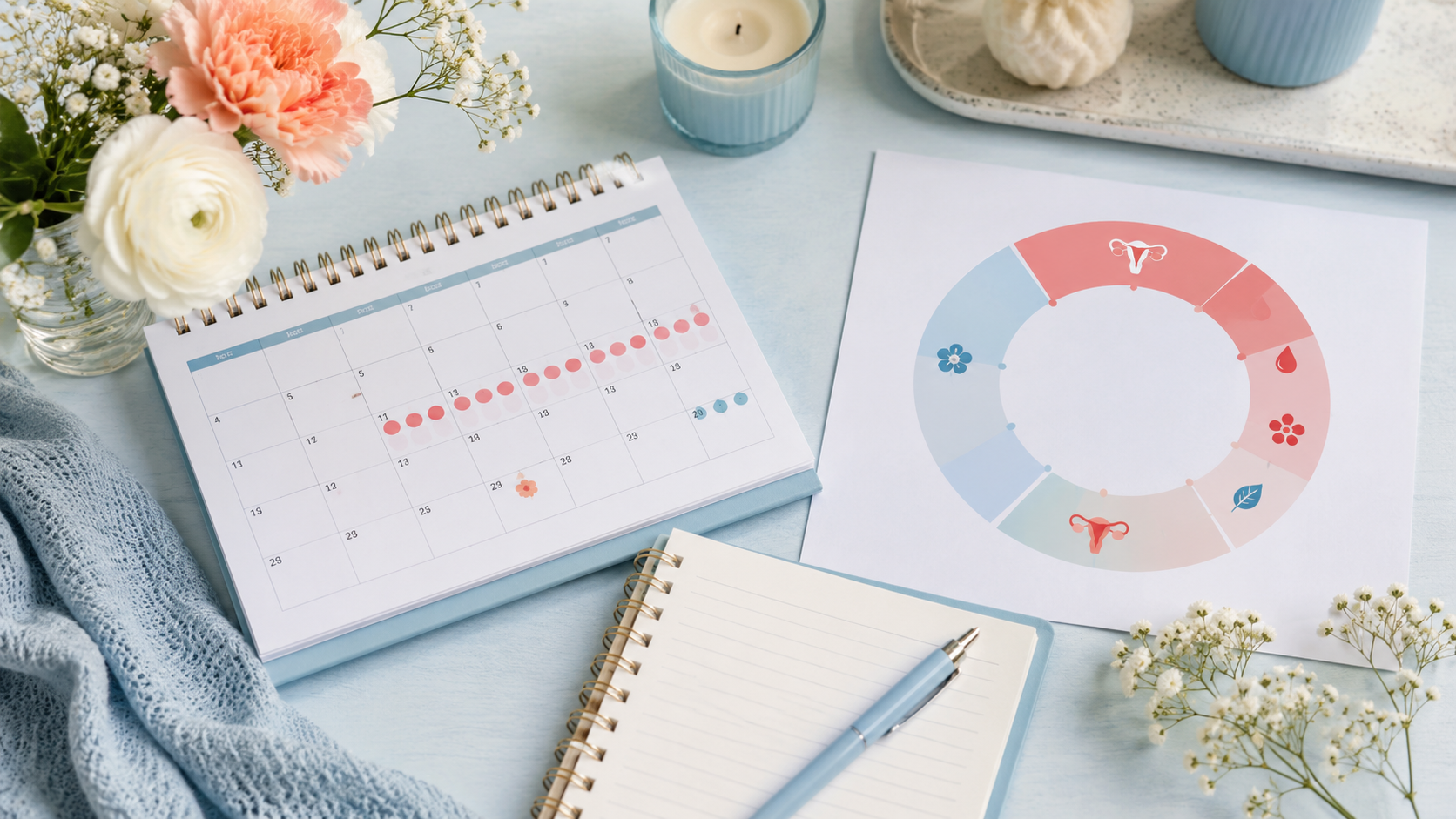
What is the menstrual cycle? The menstrual cycle is the monthly hormonal process the body goes through to prepare for a possible pregnancy. It begins on the first day of menstrual bleeding and starts again when the next period begins. ACOG defines the menstrual cycle as the time from the first day of bleeding in one cycle to the first day of bleeding in the next cycle.
For many women, understanding the menstrual cycle can make period symptoms feel less confusing. It can also help you notice changes worth discussing with your OB-GYN, such as heavier bleeding, skipped periods, intense cramps, spotting between periods, or new symptoms that do not feel normal for you.
At Comprehensive OB-GYN, we believe period education should be clear, practical, and supportive. What is the menstrual cycle is one of the most common questions patients ask because the cycle affects more than bleeding. It may influence mood, energy, discharge, cramps, sleep, appetite, fertility awareness, and overall reproductive health.
This article explains what is the menstrual cycle, how the phases work, what may be considered common, and when to bring concerns to your provider.
What Is the Menstrual Cycle?
What is the menstrual cycle? In simple terms, it is the body’s repeating hormone pattern that prepares the uterus for a possible pregnancy. If pregnancy does not happen, the uterine lining sheds, and that shedding is your period.
The Office on Women’s Health explains that the menstrual cycle is the hormonal process the body goes through each month to prepare for a possible pregnancy. It also notes that regular menstrual periods during the years between puberty and menopause are often a sign that the body is functioning normally.
Your menstrual cycle is not just the days you bleed. It includes the time before your period, the period itself, the days leading up to ovulation, ovulation, and the days after ovulation.
That is why the answer to what is the menstrual cycle includes four important ideas:
- Your period is only one part of the cycle.
- Hormones change throughout the cycle.
- Ovulation may happen around the middle of the cycle, but timing varies.
- Cycle patterns can change with age, stress, health conditions, birth control, pregnancy, postpartum changes, and menopause transition.
What Is the Menstrual Cycle Length?
A cycle is counted from the first day of one period to the first day of the next period. For adults, many medical references describe a common cycle range around 21 to 35 days, while the Office on Women’s Health notes that a normal cycle may last between 24 and 38 days.
This means your cycle does not have to be exactly 28 days to be normal.
For example:
| Cycle Pattern | What It Means |
|---|---|
| 24-day cycle | Period starts 24 days after the last one started |
| 28-day cycle | Often used as an average example |
| 35-day cycle | Can still be common for some adults |
| Changing cycle length | May be normal occasionally, but persistent changes should be discussed |
So, what is the menstrual cycle if yours is not 28 days? It is still your body’s hormonal cycle. The key is whether the pattern is typical for you and whether symptoms are manageable.
What Are the Main Phases of the Menstrual Cycle?
When patients ask what is the menstrual cycle, they often want to know what is happening inside the body. The cycle is commonly described in phases.
What Is the Menstrual Cycle Phase 1: Menstruation?
Menstruation is your period. This is when the uterine lining sheds and leaves the body as menstrual bleeding.
A typical period may last a few days. Cleveland Clinic notes that bleeding often lasts between three and seven days, while ACOG describes a typical period as lasting two to seven days in its patient education about abnormal periods.
Common period symptoms may include:
- Cramps
- Lower back discomfort
- Breast tenderness
- Bloating
- Tiredness
- Mood changes
- Headaches
- Changes in bowel habits
Mild symptoms may be common, but severe pain, very heavy bleeding, dizziness, or symptoms that interfere with daily life should be discussed with your provider.
What Is the Menstrual Cycle Phase 2: The Follicular Phase?
The follicular phase begins on the first day of your period and continues until ovulation. During this phase, hormones help ovarian follicles develop. One follicle may become dominant and release an egg during ovulation.
This phase can vary in length. Some cycles feel different because ovulation may happen earlier or later than expected.
If you are tracking what is the menstrual cycle for fertility awareness, period prediction, or symptom patterns, this phase matters because changes in ovulation timing can change the length of your cycle.
What Is the Menstrual Cycle Phase 3: Ovulation?
Ovulation is when an ovary releases an egg. This often happens around the middle of the cycle, but it does not happen on the same day for everyone.
Some people notice ovulation signs, such as:
- Clearer, stretchier cervical mucus
- Mild one-sided pelvic discomfort
- Slight changes in libido
- Breast tenderness
- A small change in basal body temperature after ovulation
Ovulation is important because it is the time when pregnancy is most likely to occur if sperm are present. However, tracking ovulation can be complex, especially if cycles are irregular, postpartum, affected by hormonal contraception, or changing during perimenopause.
What Is the Menstrual Cycle Phase 4: The Luteal Phase?
The luteal phase happens after ovulation and before the next period. During this phase, progesterone rises to support the uterine lining. If pregnancy does not happen, hormone levels drop, and the next period begins.
Some people notice premenstrual symptoms during this phase, such as:
- Mood changes
- Bloating
- Breast tenderness
- Food cravings
- Acne
- Fatigue
- Cramps before bleeding starts
When asking what is the menstrual cycle, it is helpful to understand that PMS symptoms are connected to hormone shifts. However, severe mood symptoms, intense pain, or major disruption to work, school, relationships, or daily life should not be ignored.
What Symptoms Can Happen During the Menstrual Cycle?
The menstrual cycle can affect the body in different ways throughout the month. Some symptoms may be mild and predictable. Others may be new, intense, or concerning.
Common symptoms may include:
- Mild cramps
- Breast tenderness
- Bloating
- Acne
- Changes in mood
- Changes in sleep
- Headaches
- Appetite changes
- Vaginal discharge changes
- Fatigue
The Office on Women’s Health notes that changing hormone levels during the cycle can cause menstrual symptoms.
If you are wondering what is the menstrual cycle supposed to feel like, the answer depends on your personal baseline. A symptom that is mild for one person may be disruptive for another. That is why tracking symptoms can be useful.
What Is the Menstrual Cycle Telling You About Your Health?
Your cycle can provide helpful clues about your reproductive and overall health. It is not a perfect “diagnostic tool,” but it can help you and your provider notice patterns.
Your OB-GYN may ask about:
- How many days your cycle usually lasts
- How many days you bleed
- Whether bleeding is heavy or light
- Whether you pass large clots
- How painful your cramps are
- Whether you bleed between periods
- Whether you skip periods
- Whether your cycle changed suddenly
- Whether you may be pregnant
- What birth control method you use
- Whether you have symptoms like acne, hair growth, pelvic pain, or hot flashes
This is why what is the menstrual cycle is more than a basic biology question. It can become an important conversation about wellness, hormones, fertility, contraception, thyroid health, PCOS concerns, fibroids, endometriosis symptoms, perimenopause, postpartum changes, and other health topics.
When Should You Ask Your OB-GYN About Your Menstrual Cycle?
You should consider contacting your OB-GYN if your cycle changes in a way that feels unusual for you or if symptoms are affecting your quality of life.
Bring up menstrual concerns if you notice:
- Very heavy bleeding
- Bleeding between periods
- Bleeding after sex
- Periods that suddenly become very painful
- Periods that stop without a clear reason
- Cycles that become very irregular
- Bleeding that lasts longer than usual
- Severe cramps that do not improve with typical comfort measures
- Pelvic pain outside your period
- Dizziness, weakness, or fatigue with heavy bleeding
- New symptoms after age 40
- Period changes during perimenopause
- Possible pregnancy symptoms
ACOG patient education explains that heavy or abnormal periods may involve cycle timing, flow length, and bleeding changes worth discussing with a provider.
If you are unsure whether a change matters, it is reasonable to ask. You do not need to wait until symptoms feel severe.
What Is the Menstrual Cycle and How Can You Track It?
Tracking your period can help you understand your pattern. You can use a calendar, notebook, phone app, or printed tracker.
Track:
- First day of bleeding
- Last day of bleeding
- Flow level
- Cramps
- Mood symptoms
- Breast tenderness
- Headaches
- Discharge changes
- Spotting
- Medications used for pain
- Missed periods
- Pregnancy test results, if relevant
- Birth control changes
When patients ask what is the menstrual cycle, tracking often helps turn a confusing pattern into clear information. Instead of saying, “My period is weird,” you can say, “My cycle changed from 29 days to 42 days for three months,” or “I am soaking through products faster than before.”
That information helps your provider understand what may be going on.
What Can Affect the Menstrual Cycle?
Many things can affect the menstrual cycle. Some are temporary, and some may need medical evaluation.
Possible influences include:
- Stress
- Significant weight changes
- Intense exercise changes
- Illness
- Travel
- Sleep disruption
- Pregnancy
- Breastfeeding
- Postpartum recovery
- Hormonal birth control
- Emergency contraception
- Perimenopause
- Thyroid concerns
- PCOS
- Fibroids
- Endometriosis
- Certain medications
This does not mean every cycle change is dangerous. It means persistent, painful, heavy, or confusing changes deserve a conversation.
What Is the Menstrual Cycle During Perimenopause?
During perimenopause, cycles may become less predictable. Some women notice heavier bleeding, lighter bleeding, skipped cycles, shorter cycles, longer cycles, sleep changes, hot flashes, mood shifts, or vaginal dryness.
However, it is important not to assume every change is “just hormones.” If bleeding is very heavy, frequent, prolonged, or unusual for you, ask your OB-GYN.
Understanding what is the menstrual cycle during perimenopause can help you recognize that hormone shifts are common, but personalized evaluation still matters.
What Is the Menstrual Cycle After Pregnancy?
After pregnancy, the menstrual cycle may take time to return. Timing can vary depending on breastfeeding, hormonal changes, sleep, recovery, and contraception.
Some patients have a period within weeks or months. Others may not have one for longer, especially while breastfeeding. When periods return, they may feel different at first.
Ask your provider about postpartum bleeding, the return of your period, birth control timing, breastfeeding, and symptoms that should be checked.
Practical Tips for Menstrual Cycle Wellness
Here are simple ways to support menstrual cycle awareness:
- Track your cycle for at least three months.
Patterns are easier to understand with dates. - Write down symptoms, not just bleeding.
Mood, pain, headaches, discharge, and fatigue can all be helpful. - Notice what is normal for you.
Your baseline matters. - Do not ignore heavy bleeding.
Heavy bleeding can affect energy and iron levels. - Ask about severe cramps.
Pain that disrupts life deserves attention. - Bring your tracker to your visit.
It helps your provider understand your concerns faster. - Use your annual visit to ask cycle questions.
You do not need to wait for a problem.
Questions to Ask Your OB-GYN About the Menstrual Cycle
If you are still wondering what is the menstrual cycle and what your symptoms mean, bring these questions to your next visit:
- Is my cycle length normal for my age and health history?
- How much bleeding is considered too heavy?
- Should I track ovulation?
- Are my cramps typical, or should we evaluate them?
- Could my symptoms be related to birth control?
- Could stress, thyroid issues, PCOS, fibroids, or perimenopause affect my cycle?
- What period changes should I call about?
- Should I be screened for anemia if my periods are heavy?
- What options are available for painful or heavy periods?
These questions can help turn uncertainty into a productive conversation.
Conclusion: What Is the Menstrual Cycle?
What is the menstrual cycle? It is the body’s monthly hormonal process that prepares for a possible pregnancy. It begins on the first day of your period and continues until the next period begins.
The menstrual cycle includes menstruation, the follicular phase, ovulation, and the luteal phase. While cycle length and symptoms can vary, sudden changes, severe pain, heavy bleeding, skipped periods, or symptoms that interfere with daily life should be discussed with your OB-GYN.
Your period is not something you have to “just deal with.” It can provide helpful information about your health, hormones, fertility, and overall wellness.
Educational disclaimer: This article is for general educational purposes only and does not diagnose, treat, or replace medical advice. Please speak with your healthcare provider about your personal health questions.
Trusted Menstrual Cycle Resources
To learn more about menstrual cycle basics, period timing, and common menstrual health questions, visit these educational resources from respected women’s health organizations.
Have Questions About Your Period or Cycle?
Period changes, heavy bleeding, cramps, skipped cycles, and hormone symptoms are worth discussing. Explore more helpful women’s health articles from Comprehensive OB-GYN Blog.
Read More Women’s Health ArticlesMenstrual Cycle FAQ
Simple answers to common questions about what is the menstrual cycle.