
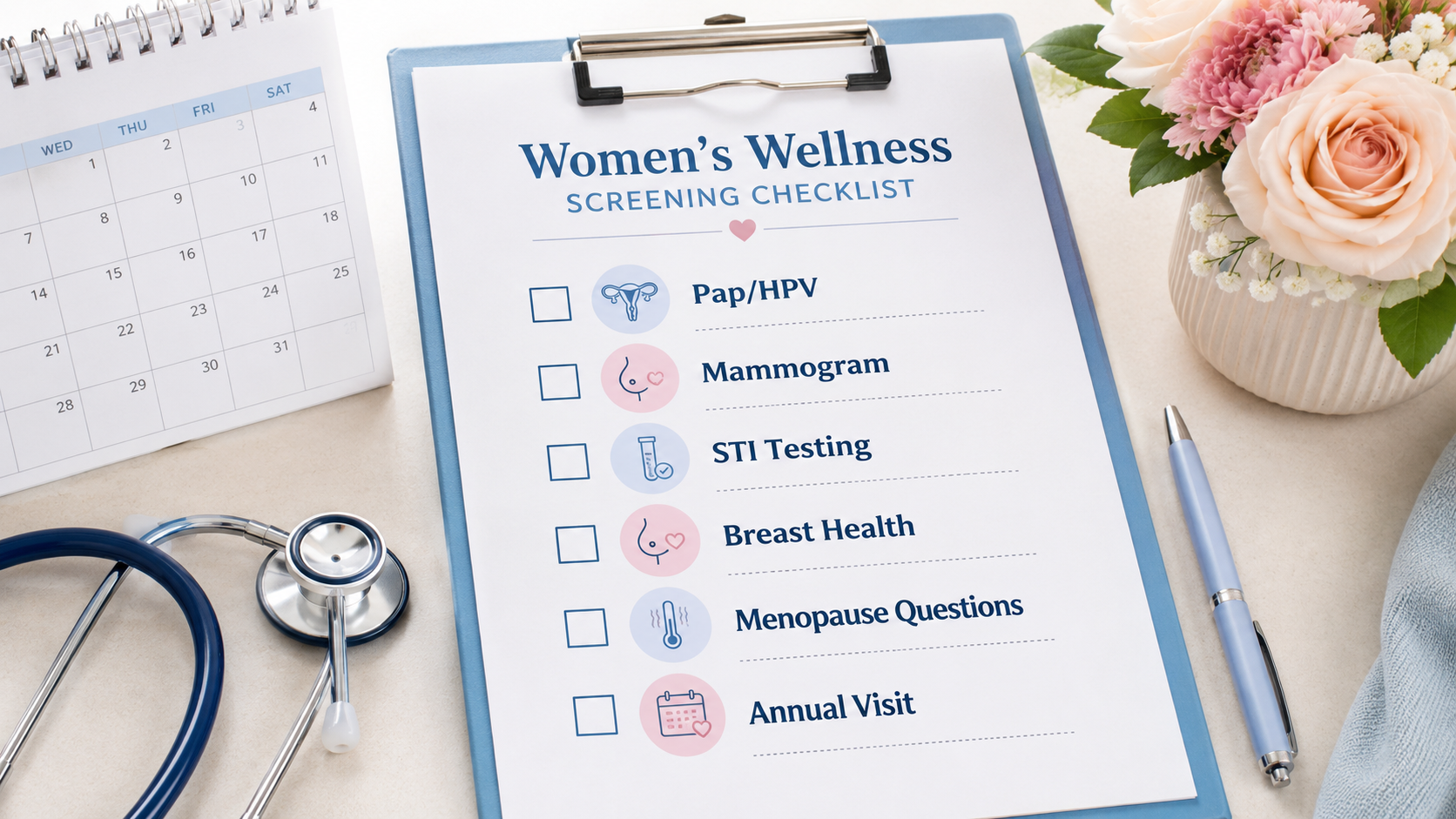
Screenings do I need this year is one of the most common and helpful questions to ask during an annual OB-GYN visit. Preventive care can change depending on your age, health history, family history, symptoms, medications, pregnancy plans, sexual health, and menopause stage.
The good news is that you do not need to memorize every screening guideline before your appointment. Your provider can help you understand which screenings are appropriate for you now, which ones can wait, and which ones may be recommended more often because of your personal risk factors.
At Comprehensive OB-GYN in Coral Springs, Florida, annual visits are a time to discuss preventive health, breast health, cervical cancer screening, menstrual changes, contraception, fertility goals, pregnancy planning, menopause concerns, pelvic health, intimate wellness, and any symptoms that feel new or different.
This article explains the main screenings to ask about this year, why they matter, and how to prepare for your visit.
Screenings Do I Need This Year? Start With Your Annual Wellness Visit
Your annual OB-GYN visit is more than a quick exam. ACOG explains that well-woman visits are an opportunity to provide preventive care, health counseling, and age-appropriate screenings, even when a Pap test is not needed every year. :contentReference[oaicite:2]{index=2}
That means the answer to screenings do I need this year may include more than one item. Your visit may involve a review of your medical history, menstrual cycle, pregnancy goals, sexual health, vaccines, family history, medications, symptoms, and lifestyle factors.
Some screenings are done every year. Others are done every few years. Some are recommended only when symptoms, risk factors, or life changes are present.
A helpful way to prepare is to bring a short list of updates, including:
- New symptoms or changes in your cycle
- New medications or supplements
- Changes in sexual partners or STI concerns
- Pregnancy plans or contraception questions
- Family history of breast, ovarian, uterine, colon, or other cancers
- Menopause symptoms, pelvic pain, urinary leakage, or intimacy concerns
1. Cervical Cancer Screening: Pap Test and HPV Testing
When patients ask, screenings do I need this year, Pap and HPV testing are often the first topics that come to mind. Cervical cancer screening helps detect changes in cervical cells or HPV-related risks before they become more serious.
According to the U.S. Preventive Services Task Force, women ages 21 to 29 are recommended to have cervical cytology, commonly called a Pap test, every 3 years. For women ages 30 to 65, screening options may include Pap testing every 3 years, high-risk HPV testing every 5 years, or co-testing every 5 years, depending on the guideline pathway and clinical situation. :contentReference[oaicite:3]{index=3}
However, not everyone follows the same schedule. Your provider may recommend a different plan if you have had abnormal results, certain immune system conditions, prior cervical procedures, or other risk factors.
Ask your provider:
- Am I due for a Pap test this year?
- Do I need HPV testing?
- Were my last results normal?
- Does my history change how often I should be screened?
The key point: a Pap test is not always needed every year, but your annual OB-GYN visit still matters.
2. Breast Health Screening and Mammograms
Breast health is another major part of the screenings do I need this year conversation. Your provider may ask about breast changes, family history, dense breasts, previous imaging results, breast pain, nipple discharge, or any lump you have noticed.
The USPSTF currently recommends that women get screened for breast cancer every other year from ages 40 to 74. :contentReference[oaicite:4]{index=4} ACOG also notes that women at average risk should be offered screening mammography starting at age 40, with decisions made through shared decision-making. :contentReference[oaicite:5]{index=5}
Some patients may need earlier or more frequent screening based on family history, genetic risk, prior breast findings, or other risk factors. Others may need additional discussion if they have dense breast tissue or previous abnormal mammogram results.
Ask your provider:
- Am I due for a mammogram this year?
- Do I have any risk factors that change my screening schedule?
- Should I ask about dense breast tissue?
- Should I consider genetic counseling based on my family history?
3. STI Screening Based on Age, Risk, and Life Changes
STI testing is not about judgment. It is preventive care. Many infections can be silent, meaning a person may not have symptoms but still need testing and treatment.
The CDC recommends chlamydia and gonorrhea screening for sexually active women under age 25, and for women 25 and older if they are at increased risk. Risk can include new partners, multiple partners, or a partner with an STI. :contentReference[oaicite:6]{index=6}
When asking screenings do I need this year, include sexual health changes, even if they feel private. Your OB-GYN is used to these conversations and can help you decide what testing is appropriate.
Ask your provider:
- Should I be tested for chlamydia or gonorrhea?
- Do I need HIV, syphilis, hepatitis B, or hepatitis C testing?
- Should my partner be tested too?
- How often should I repeat STI screening?
4. Blood Pressure, Weight, and General Health Checks
Not every screening happens through a pelvic exam or lab test. Some of the most important preventive checks are simple measurements that can reveal bigger health risks.
Blood pressure screening can help identify hypertension. Weight and body mass index discussions may help guide conversations about metabolic health, nutrition, activity, PCOS, menopause changes, pregnancy planning, and cardiovascular risk.
Your OB-GYN may also discuss cholesterol, diabetes screening, thyroid symptoms, anemia, vitamin D, or other labs depending on your symptoms and health history. Some of these may be managed by your primary care provider, but your OB-GYN can help you understand what to ask about.
When thinking about screenings do I need this year, remember that women’s health is connected to whole-body health.
5. Menstrual, Pelvic, and Hormone-Related Screening Questions
Screening can also mean asking the right questions about symptoms. Heavy bleeding, irregular periods, pelvic pain, pain with intimacy, bleeding after sex, urinary leakage, bloating, or new discharge may need evaluation.
For patients in their late 30s, 40s, and 50s, perimenopause and menopause symptoms may also become part of the annual visit. Hot flashes, sleep changes, mood shifts, vaginal dryness, libido changes, weight changes, and cycle changes are worth discussing.
Ask your provider:
- Are my period changes normal for my age?
- Should I be evaluated for fibroids, cysts, PCOS, or endometriosis?
- Are my symptoms related to perimenopause or menopause?
- Do I need a pelvic ultrasound or lab work?
The answer to screenings do I need this year may depend on symptoms you mention during your visit.
6. Pregnancy, Fertility, and Preconception Screening
If you are pregnant, trying to conceive, or planning pregnancy in the future, your screening needs may change. Prenatal care includes a different schedule of labs, ultrasounds, genetic screening discussions, blood type testing, infection screening, and monitoring based on your medical history.
If you are not pregnant but thinking about pregnancy, a preconception visit can help review medications, supplements, vaccines, prior pregnancy history, cycle patterns, medical conditions, and lifestyle factors.
Ask your provider:
- Do I need preconception lab work?
- Should I start a prenatal vitamin?
- Are my medications safe for pregnancy?
- Should I discuss genetic carrier screening?
7. Age-Based Preventive Screenings to Discuss
Your OB-GYN may also help you stay on track with preventive screenings outside of traditional gynecology, especially if they affect women’s health. These may include colon cancer screening, bone density screening, diabetes screening, cholesterol screening, vaccines, and mental health screening.
For example, bone health becomes especially important after menopause because estrogen changes can affect bone density. Some patients may need bone density screening earlier if they have risk factors.
When you ask screenings do I need this year, you can also ask which screenings should be handled by your OB-GYN and which should be coordinated with your primary care doctor.
Screenings Do I Need This Year by Age Group
The table below is a simple conversation guide. It is not a personal medical plan, but it can help you prepare questions for your appointment.
| Life Stage | Screenings to Discuss |
|---|---|
| Teens and early 20s | Menstrual concerns, HPV vaccination, contraception, STI testing if sexually active, wellness counseling. |
| Ages 21–29 | Pap test schedule, STI screening, contraception, cycle concerns, pregnancy planning, pelvic symptoms. |
| Ages 30–39 | Pap/HPV schedule, fertility goals, breast concerns, pelvic pain, heavy bleeding, STI testing when appropriate. |
| Ages 40–49 | Mammogram discussion, Pap/HPV schedule, perimenopause symptoms, cycle changes, family history review. |
| Ages 50+ | Mammograms, menopause concerns, pelvic health, bone health, cervical screening history, urinary symptoms. |
How to Prepare for Your Screening Conversation
Before your annual visit, write down your top three concerns. This helps your provider prioritize what matters most to you.
Bring or remember:
- Date of your last period
- Any abnormal bleeding or pain
- Last Pap test or mammogram date if known
- Current medications and supplements
- Family history updates
- Pregnancy plans or contraception needs
- Any intimate wellness or pelvic health concerns
Patients sometimes avoid asking private questions because they feel embarrassed. But concerns like vaginal dryness, pain with intimacy, urinary leakage, low libido, recurring infections, and menopause changes are common and worth discussing.
When Screenings May Need to Happen Sooner
You should not wait for your annual visit if you have symptoms that feel urgent or unusual. Call your provider if you experience severe pelvic pain, heavy bleeding, bleeding during pregnancy, a new breast lump, abnormal discharge with pain or fever, severe urinary symptoms, or any symptom that worries you.
This blog is educational only and does not replace medical advice. For urgent concerns, contact your healthcare provider directly or seek emergency care when appropriate.
Conclusion: Screenings Do I Need This Year?
The best answer to screenings do I need this year depends on your age, history, symptoms, family history, and goals. Some screenings, like Pap and HPV testing, may not be needed every year. Others, like breast health discussions, STI testing, blood pressure checks, menopause conversations, and symptom reviews, may be part of your annual preventive care.
Your annual OB-GYN visit is a good time to ask what is due, what can wait, and what deserves a closer look. The goal is not to do every test possible. The goal is to choose the right screenings for your body, your life stage, and your personal health needs.
If you are in Coral Springs or the surrounding South Florida area and want to discuss your preventive care, schedule a visit with Comprehensive OB-GYN and bring your screening questions with you.
Helpful Screening Resources
Preventive screening recommendations may change based on your age, health history, and personal risk factors. These trusted resources can help you prepare general questions for your OB-GYN visit.
Not sure which screenings are due this year?
Your annual OB-GYN visit is a helpful time to review Pap/HPV testing, breast health, STI screening, menopause changes, contraception, pregnancy planning, and preventive care questions.
Contact Comprehensive OB-GYNScreenings Do I Need This Year? FAQs
Common questions to help you prepare for your annual OB-GYN visit.
What screenings do I need this year at my OB-GYN visit?
The screenings you need this year may include Pap/HPV testing, breast health screening, STI testing, blood pressure checks, menopause discussions, pelvic health evaluation, or pregnancy-related screenings depending on your age, symptoms, and health history.
Do I need a Pap test every year?
Many patients do not need a Pap test every year. Cervical cancer screening schedules depend on age, prior results, HPV testing, and personal risk factors. Your provider can tell you if you are due this year.
When should I start getting mammograms?
Many guidelines recommend discussing mammograms starting at age 40. Some patients may need earlier or more frequent screening based on family history, genetic risk, breast symptoms, or prior imaging results.
Should I ask about STI testing?
Yes, STI testing is a normal part of preventive care for many patients. It may be recommended based on age, new partners, multiple partners, symptoms, pregnancy, or other risk factors.
Do menopause symptoms require screening?
Menopause symptoms may not always require a specific screening test, but they are worth discussing. Your provider may ask about sleep, mood, hot flashes, vaginal dryness, urinary symptoms, bone health, and hormone-related concerns.
What should I bring to my annual visit?
Bring your medication list, supplement list, last period date, questions, family history updates, prior screening results if available, and any symptoms or concerns you want to discuss.
Are screenings the same for every woman?
No. Screenings are personalized based on age, health history, symptoms, pregnancy status, sexual health, family history, and previous test results.